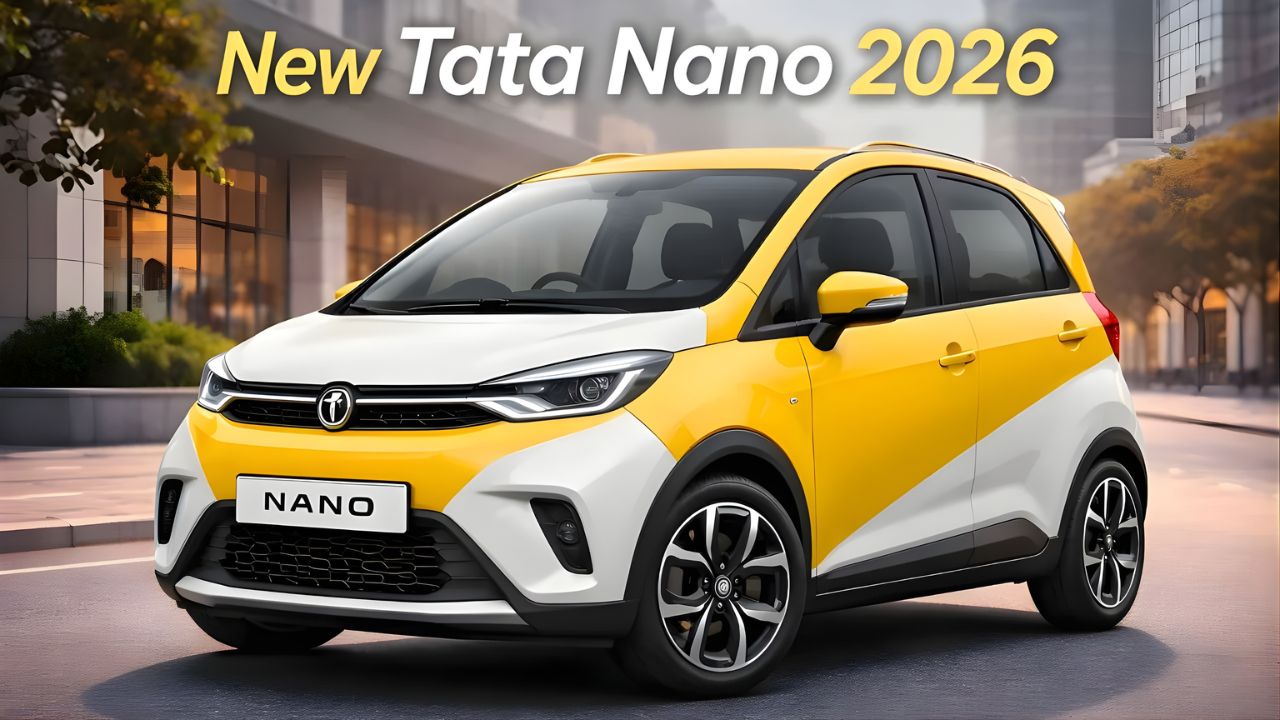
The Indian electric vehicle market is growing rapidly, and Tata Motors continues to lead the transition toward affordable electric mobility. With the unveiling of the Tata Nano EV, the company aims to bring electric cars within reach of middle-class families and first-time car buyers. The new Nano EV is designed to combine compact practicality with modern electric technology.
This new electric hatchback is expected to deliver a driving range of around 300 km on a single charge, making it a practical option for daily urban commuting. With an affordable expected price and efficient design, the Nano EV could become one of the most accessible electric cars in India.
Modern Yet Compact Design for Urban Mobility
The Tata Nano EV carries forward the compact identity of the original Nano while introducing a refreshed and modern design language. The front profile features sleek LED lighting elements and a clean grille design that reflects its electric identity. Its compact dimensions make it ideal for navigating crowded city roads and tight parking spaces.
Despite its small footprint, the car maintains a stylish and youthful appearance. Smooth body lines, redesigned bumpers, and updated alloy wheels give the Nano EV a more contemporary look. The overall design balances practicality with modern aesthetics, appealing to young urban buyers.

Comfortable Interior for Everyday Driving
Inside the cabin, the Tata Nano EV focuses on providing a simple yet comfortable driving environment. The dashboard layout is expected to be clean and functional, featuring a digital instrument display that shows essential driving information such as battery level, range, and speed.
The seats are designed to offer adequate support for daily commuting, and the compact interior layout maximizes available space. With improved materials and thoughtful storage areas, the Nano EV aims to make everyday city travel more convenient for both drivers and passengers.
Efficient Electric Powertrain and Performance
The Tata Nano EV is expected to be powered by a compact electric motor that delivers smooth and quiet performance. Electric vehicles are known for their instant torque, and this small city car should provide responsive acceleration for urban traffic conditions.
The powertrain is designed primarily for efficiency rather than high-speed performance. This approach makes the Nano EV ideal for daily city commuting, short trips, and routine travel within urban environments. The quiet operation of the electric motor also enhances the overall driving experience.

Impressive 300 km Driving Range
One of the biggest highlights of the new Tata Nano EV is its claimed driving range of around 300 km on a single charge. This range makes it a practical option for daily commuters who want an electric car without worrying about frequent charging.
Advances in battery technology and efficient energy management systems contribute to this impressive range figure. For many Indian drivers, a 300 km range is more than sufficient for several days of city travel before needing to recharge.
Charging Convenience for Urban Users
Charging convenience is a crucial factor for electric vehicle buyers, and the Nano EV is expected to support both standard home charging and faster charging solutions. Owners can likely charge the car overnight using a regular home charging setup.
In addition to home charging, compatibility with public charging infrastructure will make the Nano EV more versatile. As India continues to expand its EV charging network, owning and operating a small electric car like this will become increasingly convenient.

Essential Features for Modern Drivers
Despite its focus on affordability, the Tata Nano EV is expected to offer essential modern features that enhance everyday usability. A digital instrument cluster will likely provide important vehicle information in a clear and easy-to-read format.
Other features may include power windows, basic connectivity options, efficient climate control, and improved lighting systems. These features ensure that buyers get a modern driving experience without significantly increasing the vehicle’s price.
Safety and Structural Improvements
Safety remains an important consideration for modern vehicles, and the Nano EV is expected to include several structural improvements compared to earlier small cars. A reinforced body structure and improved chassis design will help enhance stability and passenger protection.
Basic safety features such as airbags, seatbelt reminders, and reliable braking systems are expected to be included. These additions ensure that the vehicle meets modern safety expectations while remaining affordable for budget-conscious buyers.

Affordable Pricing and Low Ownership Cost
One of the biggest advantages of the Tata Nano EV will likely be its affordability. Tata Motors has built a strong reputation for offering value-focused vehicles, and this electric hatchback is expected to follow the same philosophy.
In addition to a competitive purchase price, the cost of ownership for electric vehicles is typically lower than that of petrol cars. Reduced fuel expenses, lower maintenance requirements, and government incentives could make the Nano EV an attractive option for many Indian buyers.
Potential Impact on India’s EV Market
The launch of the Tata Nano EV could significantly influence the entry-level electric car segment in India. Many potential buyers are interested in electric vehicles but are hesitant due to high prices. A budget-friendly EV could change this perception.
If priced aggressively, the Nano EV could encourage more people to switch from petrol vehicles to electric mobility. This move would also support India’s long-term goal of reducing emissions and promoting sustainable transportation.

Conclusion
The unveiling of the Tata Nano EV with a claimed 300 km range represents an important step toward making electric vehicles more accessible in India. By combining compact design, practical range, and affordable pricing, Tata aims to create a city-focused electric car for everyday users.
For Indian buyers looking for a budget-friendly entry into electric mobility, the Nano EV could become a compelling option. If it delivers on its promises of efficiency, practicality, and affordability, it has the potential to transform the entry-level EV market in the coming years.
Last Updated: March 16, 2026 3:20 am